Contra Revenue: What It Is and How It Impacts Your Financial Reports
Quick Answer:
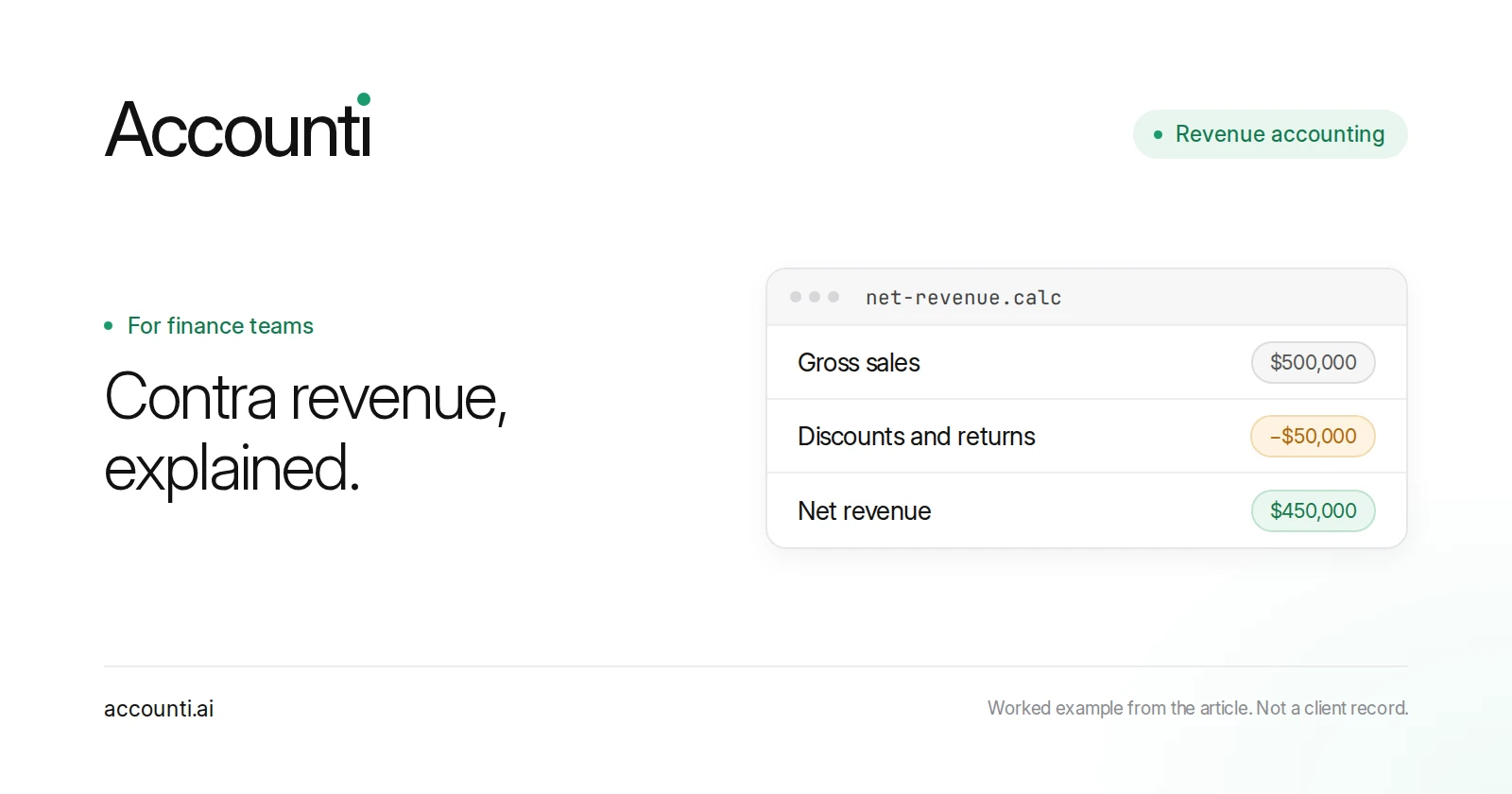
Contra revenue accounts record reductions to gross sales, such as sales discounts, returns and allowances. They carry a debit balance and sit below gross revenue on the income statement, so net revenue equals gross revenue minus contra revenue. A business with $500,000 of gross sales and $50,000 of discounts, returns and allowances reports $450,000 of net revenue.
When it comes to understanding a company’s financial health, revenue is often one of the first metrics analyzed. But did you know that not all revenue is straightforward? Enter contra revenue, a lesser-known yet equally important financial concept. Contra revenue represents the deductions or reductions from a company’s gross revenue. These reductions are crucial for providing a more accurate picture of a business’s net revenue.
In essence, contra revenue accounts serve as negative revenue accounts. They reduce the total revenue reported on a company’s income statement and give insight into sales discounts, returns, and allowances, among other factors. Without tracking contra revenue, businesses might inadvertently inflate their earnings and misrepresent their financial position.
Key Components of Contra Revenue
Contra revenue consists of three primary elements: sales discounts, sales returns, and allowances. These components each play a distinct role in shaping net revenue and help paint a clearer picture of the true value of sales.
Sales Discounts
Sales discounts are price reductions offered by businesses to incentivize early payment or bulk purchases. For example, a company might provide a 2/10, net 30 discount—meaning customers receive a 2% discount if they pay within 10 days, though payment is due within 30 days.
Example:
A customer purchases $10,000 worth of goods and takes advantage of a 2% discount for early payment. The sales discount would be:
- 2% of $10,000 = $200
- The net revenue recorded: $9,800
This $200 discount is recorded in the contra revenue account and deducted from gross sales.
Sales Returns
Sales returns occur when customers return products due to defects, dissatisfaction, or other reasons. These returns are recorded as a reduction to revenue since they directly affect the final amount of goods sold.
Example:
If a company sells 100 units of a product at $50 each but 10 units are returned, the total sales revenue is reduced by:
- 10 units × $50 = $500
Such returns must be tracked accurately to maintain transparent revenue reporting.
Allowances
Allowances represent price reductions given after a sale has been made, often to account for issues like defective goods or minor discrepancies. Instead of returning the goods, the company provides a partial refund or credit.
Example:
A customer buys a $1,000 product but finds minor defects. The company offers a $100 allowance as compensation. In this case:
- Contra revenue = $100
- Net revenue = $1,000 - $100 = $900
These allowances, like discounts and returns, directly reduce gross revenue.
How Contra Revenue Works in Financial Statements
Contra revenue accounts are an essential part of financial statements, particularly the income statement. They are subtracted from gross revenue to calculate net revenue. Let’s break this down further.
Gross Revenue vs. Net Revenue
Gross revenue refers to the total amount of sales made before any deductions. Contra revenue accounts are then used to account for reductions like discounts, returns, and allowances. The formula for net revenue is:
Net Revenue = Gross Revenue - Contra Revenue
Example:
A company reports gross sales of $500,000. Contra revenue (sales discounts, returns, and allowances) totals $50,000. The net revenue would be:
- $500,000 - $50,000 = $450,000
The Role of Contra Accounts
Contra revenue accounts are paired with specific revenue accounts. They act as "negative" revenue accounts and are used solely to track reductions. Common contra revenue accounts include:
- Sales Discounts
- Sales Returns and Allowances
By isolating these deductions in contra accounts, businesses can maintain clarity and transparency in their financial reporting.
Examples of Contra Revenue Accounts
Understanding contra revenue is easier with real-world examples. Here are some common contra revenue accounts and how they work:
| Contra Revenue Account | Description |
|---|---|
| Sales Discounts | Reductions offered to customers for early payment or large purchases. |
| Sales Returns | Revenue reductions due to returned goods. |
| Sales Allowances | Refunds or credits provided to customers for defective or unsatisfactory goods. |
For instance, a retail business might report the following:
- Gross sales: $1,000,000
- Sales discounts: $50,000
- Sales returns: $30,000
- Sales allowances: $20,000
In this case, the total contra revenue is $100,000, and the net revenue is:
- $1,000,000 - $100,000 = $900,000
Contra Revenue vs Revenue: What's the Difference?
At first glance, contra revenue and revenue might seem like two sides of the same coin. However, they have distinct purposes and roles in accounting.
| Feature | Revenue | Contra Revenue |
|---|---|---|
| Definition | The total income generated by sales. | Deductions from total revenue. |
| Impact | Increases the income statement. | Reduces the income statement. |
| Examples | Sales revenue, service revenue. | Sales discounts, returns, and allowances. |
| Purpose | Tracks total sales. | Tracks reductions to ensure transparency. |
Importance of Tracking Contra Revenue
Why should businesses care about contra revenue? The answer lies in its ability to enhance financial transparency and inform decision-making. Here are some of its key benefits:
- Accurate Financial Reporting: Tracking contra revenue ensures that businesses report their net revenue accurately. This prevents overstating income and misleading stakeholders.
- Informed Business Decisions: By analyzing contra revenue, businesses can identify patterns, such as frequent returns or high discount usage, and make adjustments accordingly.
- Improved Customer Relations: Monitoring returns and allowances helps businesses address customer dissatisfaction and improve product quality.
Best Practices for Managing Contra Revenue
Managing contra revenue effectively requires robust accounting practices. Here are some tips:
1. Leverage Accounting Software
Modern accounting tools can automate the tracking of contra revenue. Features like real-time reporting and automated calculations reduce errors and save time.
2. Establish Clear Policies
Setting clear guidelines for returns, discounts, and allowances helps ensure consistency and minimizes disputes with customers.
3. Conduct Regular Audits
Regularly auditing contra revenue accounts ensures that all deductions are legitimate and correctly recorded.
4. Monitor Trends
Analyzing trends in contra revenue can reveal underlying issues, such as defective products or ineffective pricing strategies, allowing businesses to address them proactively.
Challenges and Solutions in Managing Contra Revenue
While contra revenue accounts are essential, managing them effectively can pose challenges. Here are some common issues and how to address them:
| Challenge | Solution |
|---|---|
| High volume of returns | Improve product quality and establish stricter return policies. |
| Misclassification of discounts | Train staff to correctly record discounts in the appropriate contra revenue account. |
| Lack of transparency | Use software to generate detailed reports on discounts, returns, and allowances. |
Conclusion
Understanding contra revenue is crucial for businesses aiming to maintain accurate financial records and build trust with stakeholders. By properly managing sales discounts, returns, and allowances, companies can ensure that their income statements reflect the true state of their operations.
Tracking contra revenue is more than just an accounting practice—it's a tool for better decision-making and long-term success. Whether you’re running a small business or managing a multinational corporation, taking the time to accurately record contra revenue can help avoid financial pitfalls and set the stage for sustainable growth.
FAQs
What is the benefit of using a contra revenue account in tracking the value of goods?
Utilizing a contra revenue account allows a company to accurately reflect deductions such as sales returns, allowances, and discounts, thereby providing a clearer picture of net sales. This practice ensures that the financial statements present the true value of goods sold, enhancing transparency and aiding in effective inventory management.
Why is revenue recognition important in accounting?
Revenue recognition is crucial because it determines the specific conditions under which income becomes realized and earned, directly impacting the accuracy of financial reporting. Proper revenue recognition aligns with accounting standards, ensuring that financial statements reflect a company's true financial performance and position, which is essential for stakeholders' decision-making processes.
How do contra revenue accounts impact overall equity?
Contra revenue accounts, such as sales returns and allowances, reduce the total revenue reported, which in turn decreases net income. Since net income contributes to retained earnings—a component of shareholders' equity—a reduction in net income leads to a corresponding decrease in overall equity.
When should revenue be recognized, and how does it impact the income statement?
Revenue should be recognized when it is realized or realizable and earned, typically when goods are delivered, or services are rendered. This timing affects the income statement by accurately reflecting revenues in the appropriate accounting period, ensuring that reported earnings correspond to the actual economic activities of that period. Proper revenue recognition is essential for matching revenues with related expenses, thereby presenting a true picture of a company's profitability.
Frequently asked questions
What are examples of contra revenue accounts?
Sales discounts, sales returns, and sales allowances given for damaged or unsatisfactory goods.
Why not reduce revenue directly?
Separate accounts show how much revenue goes to discounts and returns, which helps spot pricing or product quality problems.
Do contra revenue accounts have a debit or credit balance?
A debit balance, the opposite of the credit balance in the revenue accounts they offset.
How does contra revenue affect equity?
It lowers net revenue and net income, which reduces retained earnings and therefore equity.